
Why Greenland Matters: The Logic Behind Trump's Interest
What sounded like an outlandish idea was in fact a blunt signal that Greenland’s resources, geography, and Arctic position have become central to 21st-century economic and security competition.
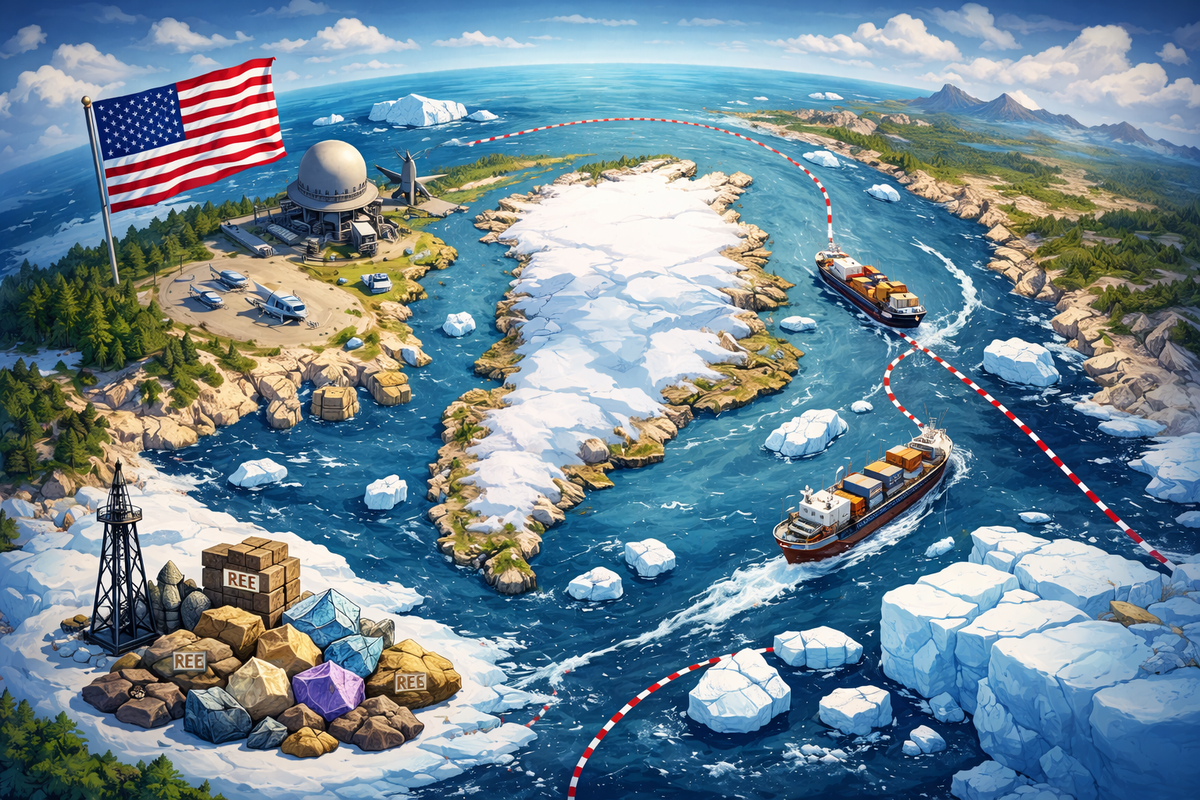
Donald Trump’s interest in Greenland first surfaced publicly in 2019, when reports emerged that the U.S. president had explored the idea of purchasing the autonomous Danish territory. While the proposal was widely mocked at the time, it highlighted a serious shift in how Washington views the Arctic. As The New York Times reported, the discussion reflected renewed U.S. focus on Greenland’s strategic value rather than a whimsical diplomatic stunt. In an era of intensifying great-power competition, Greenland has moved from the geopolitical margins to the centre of long-term strategic planning.
Rare earth metals are essential for modern technology, from electric vehicles and wind turbines to smartphones, AI chips, and advanced military systems, because their unique magnetic and conductive properties have few viable substitutes. Countries are racing to secure them since supply is highly concentrated (largely in China), making rare earths a strategic resource critical for economic resilience, energy transitions, and national security. The global rare earth metals market, valued at roughly USD 4.1 billion in 2025, is projected to grow to around USD 10.8 billion by 2035, reflecting expanding demand across EVs, renewables, and high-tech sectors.
From an economic standpoint, Greenland represents access to critical future resources. The island is rich in rare earth elements, uranium, zinc, and iron ore, materials essential for advanced technology, clean energy infrastructure, and military hardware. According to The BBC, U.S. policymakers are increasingly concerned about China’s dominance in rare earth supply chains, a vulnerability Greenland could help offset. While extraction remains costly and politically sensitive, melting ice and technological advances are gradually improving the long-term economic viability of mining in the Arctic. Uncertainty around Greenland’s resource development and geopolitical status could heighten volatility in rare earth and critical minerals markets, as any supply disruption or shift in control would ripple through global supply chains. The sectors most exposed would be electric vehicles, renewable energy, aerospace and defence, and high-end electronics, especially in the U.S., Europe, and Japan, which rely heavily on imported critical minerals.
Security considerations, however, are even more compelling. Greenland occupies a pivotal position in the Arctic and North Atlantic, sitting along the Greenland-Iceland-UK (GIUK) gap, an essential corridor for monitoring naval and submarine traffic. The U.S. already operates Pituffik Space Base (formerly Thule Air Base), which plays a key role in missile defence and space surveillance. As CNN has noted, rising Russian military activity in the Arctic and China’s growing ambitions in the region have pushed Arctic defence back to the top of NATO’s agenda. Trump’s interest aligned with a broader U.S. effort to prevent rivals from gaining strategic footholds near American and European coastlines.
Climate change adds another layer to Greenland’s importance. Retreating ice is opening new Arctic shipping routes that could significantly shorten trade distances between Asia, Europe, and North America. Control or influence over territory near these routes translates into future leverage over global commerce. A Council on Foreign Relations analysis points out that Arctic geography is becoming economically relevant precisely because environmental change is reshaping what was once inaccessible. Even leaders sceptical of climate science must still respond to the geopolitical consequences of a warming Arctic.
Trump has announced tariffs of 10% (rising to 25%) on imports from eight European countries unless a deal is reached on U.S. control or purchase of Greenland, using trade pressure to coerce political and strategic concessions. These tariffs are intended to weaken European resistance to U.S. ambitions in the Arctic, but have instead strained transatlantic trade relations and risk triggering retaliatory measures that could affect goods like industrial machinery, autos, and pharmaceuticals. Ultimately, Trump’s Greenland proposal was less about buying land and more about signalling strategic intent. It underscored U.S. concerns over resource security, military positioning, and the long-term balance of power in the Arctic. While Denmark and Greenland firmly rejected the idea, the episode made one thing clear: Greenland is no longer just a remote island, it is a strategic asset in a world where economics, security, and climate dynamics are increasingly intertwined.