
War Shockwaves: How Conflict Is Reshaping the Global Economy
A regional conflict has rapidly escalated into a global economic shock, driving up energy prices, disrupting supply chains, and raising the risk of stagflation worldwide.
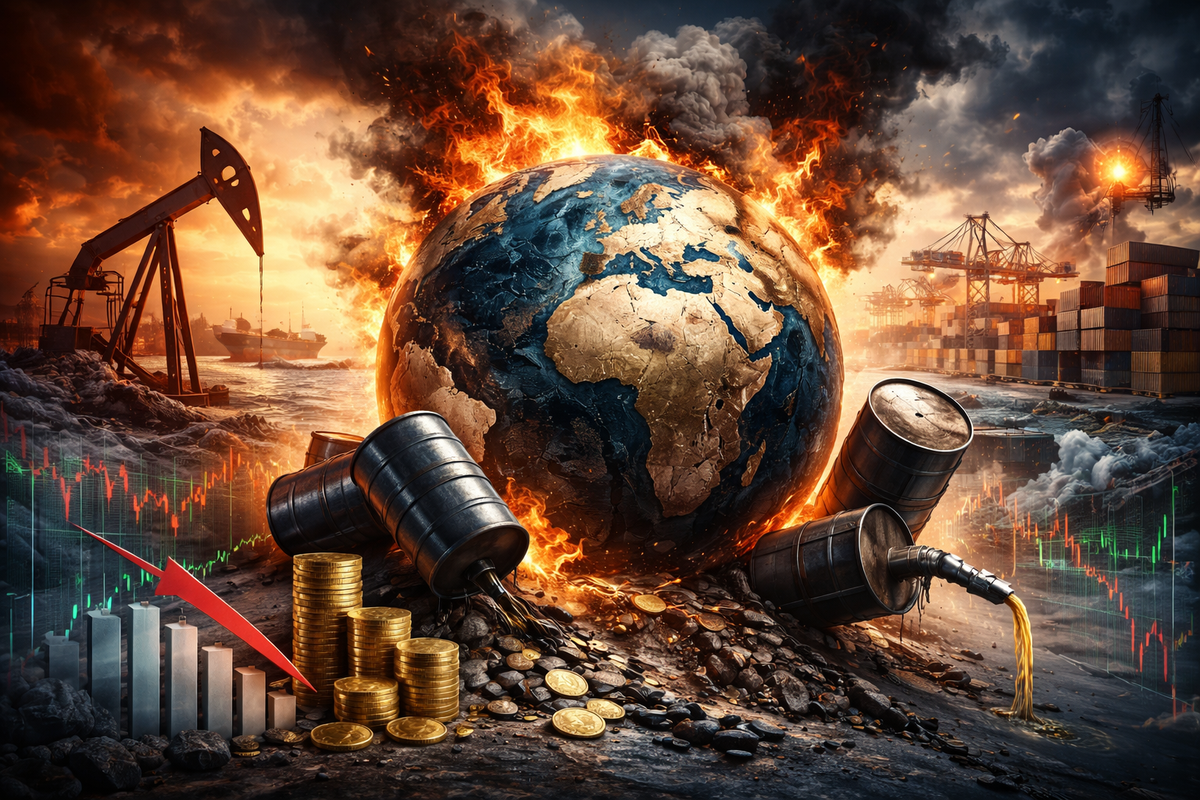
The ongoing conflicts in the Middle East, particularly the war involving Iran, are reshaping the global economy in real time, primarily through an unprecedented energy shock. The disruption of the Strait of Hormuz, a critical artery for roughly 20% of global oil supply, has triggered one of the most severe energy crises in decades, with oil prices surging more than 50% in a matter of weeks. This surge is not just a commodity story; it acts as a transmission mechanism for inflation across the global economy, raising transportation, manufacturing, and electricity costs. Economists warn that such an inflationary shock could derail what was already a fragile global recovery and potentially force central banks into difficult trade-offs between controlling prices and sustaining growth.
Beyond energy, the war is exposing the fragility of global supply chains. Key industries, including semiconductors, pharmaceuticals, and agriculture, are experiencing disruptions due to bottlenecks in shipping routes and damage to critical infrastructure. For instance, attacks on gas facilities in Qatar have halted a significant portion of global helium production, a niche but essential input for semiconductor manufacturing and medical technologies. The country accounted for around 30% of the global supply, which was dramatically reduced. At the same time, fertilizer exports, many of which transit the conflict zone, have been severely affected, raising concerns about agricultural output and food inflation worldwide. These disruptions highlight how modern conflicts ripple far beyond borders, affecting industries that rely on tightly interconnected global networks.
The cumulative effect of rising energy costs and supply chain disruptions is a growing risk of “stagflation” which is a combination of high inflation and slowing economic growth. Even modest increases in oil prices have measurable macroeconomic consequences: a sustained 10% rise can push global inflation higher while simultaneously reducing overall economic output. As a result, global growth forecasts are being revised downward, with trade expected to slow significantly if the conflict persists. Emerging economies, particularly those heavily dependent on energy imports, are especially vulnerable, facing worsening trade balances and currency pressures.
Financial markets are also reacting to heightened uncertainty. Volatility has increased across equities, bonds, and currencies as investors reassess risk in a more unstable geopolitical environment. Governments are being forced to intervene, releasing emergency oil reserves and adjusting sanctions, to stabilize markets and prevent further economic damage. However, such measures offer only temporary relief, and prolonged conflict could dampen investment, reduce consumer confidence, and slow job creation globally.
Ultimately, the economic impact of the current war underscores how deeply interconnected the modern global economy has become. What begins as a regional geopolitical conflict quickly cascades into a worldwide economic challenge, affecting energy prices, food security, industrial production, and financial stability. While the long-term consequences will depend on the duration and escalation of the conflict, the immediate effect is clear: the war is acting as a powerful shock that is simultaneously pushing prices higher and growth lower, creating a complex and uncertain economic landscape for countries across the world.