
Shockwaves Beyond Oil: The Lasting Global Impact of Middle East Energy Attacks
Energy infrastructure attacks in the Middle East create lasting global ripple effects, driving price volatility, reshaping geopolitics, and accelerating the shift toward diversified and secure energy systems.
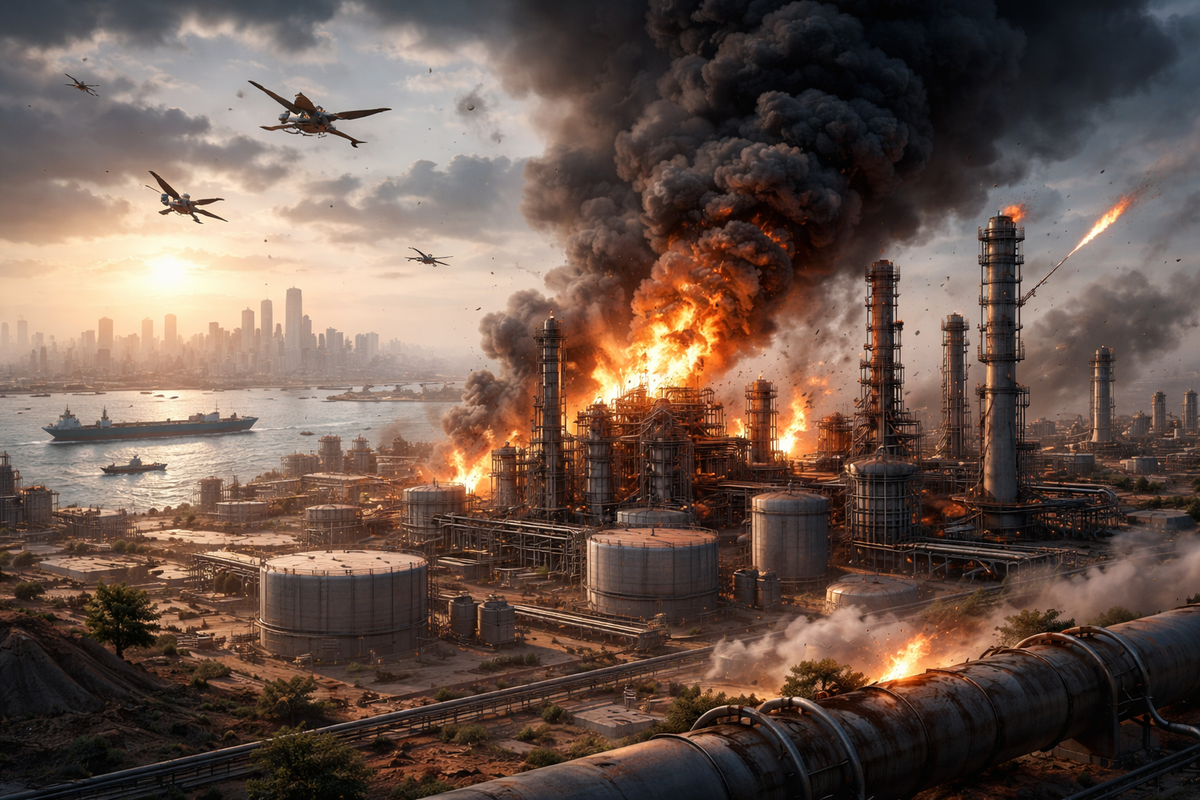
Attacks on energy infrastructure in the Middle East have consequences that extend far beyond immediate supply disruptions, often reshaping the global economic and geopolitical landscape for years. When facilities such as pipelines, refineries, or export terminals are targeted, like the Abqaiq–Khurais attack, markets react not just to lost output but to heightened uncertainty. According to a International Energy Agency analysis, such incidents can inject a persistent “risk premium” into oil prices, keeping energy costs elevated even after production recovers. Over time, this volatility feeds into inflation, disrupts industrial planning, and increases macroeconomic instability across both developed and emerging economies.
One of the most enduring impacts is the acceleration of energy diversification strategies. Countries heavily dependent on Middle Eastern imports, particularly in Europe and Asia, have increasingly sought alternative suppliers and energy sources. The aftermath of disruptions has pushed governments to expand liquefied natural gas infrastructure, strengthen ties with producers in regions like the United States and Africa, and scale up renewable energy investments. A Brookings Institution report highlights how repeated geopolitical shocks reinforce long-term policy shifts toward energy independence, gradually diluting the Middle East’s dominance in global supply chains.
Recent conflict-driven disruptions have already removed 10–11 million barrels per day of global oil supply, one of the largest shocks in history. Oil prices have surged 50–60% in a matter of weeks, with scenarios projecting sustained ranges between $100–$190 per barrel under prolonged instability. The inflationary consequences are equally significant: global inflation forecasts have risen by around 1.2 percentage points, while U.S. inflation alone is projected to reach 4.2% due to energy price shocks. In extreme cases, energy-linked commodities such as LNG have seen price spikes of over 140%, highlighting how deeply interconnected global energy systems have become
Geopolitically, these attacks often trigger a recalibration of alliances and security priorities. Strategic chokepoints such as the Strait of Hormuz, which handles roughly 20–30% of global oil trade, become focal points of international concern, prompting increased military presence and cooperation among global powers. Research underscores how threats to energy transit routes can escalate tensions and draw external actors deeper into regional conflicts. Over the long term, this leads to a more securitized global energy system, where military and diplomatic considerations increasingly shape energy flows.
At the industry level, companies respond by investing heavily in resilience and security. This includes advanced surveillance systems, cyber defence capabilities, and redundant infrastructure to minimize downtime during attacks. While these measures enhance stability, they also increase operational costs. According to an analysis, the rising cost of safeguarding infrastructure is likely to be passed on to consumers, embedding higher baseline energy prices into the global economy over time.
Paradoxically, instability in traditional energy hubs can also accelerate the global transition toward cleaner energy systems. Policymakers increasingly view renewables, nuclear power, and energy storage not just as climate solutions but as tools of national security. A World Economic Forum report notes that geopolitical risks are becoming a key driver of investment in energy transition technologies. However, the shift is not linear, short-term disruptions can still push countries toward more carbon-intensive fuels as stopgap measures. Ultimately, repeated attacks on Middle Eastern energy infrastructure are likely to leave a lasting imprint: a more fragmented, security-conscious, and diversified global energy system.