
Code Over Capital: The Hidden Battle in Layer-1 Blockchains
Layer-1 competition ultimately determines long-term winners not by speed or cost, but by which ecosystems attract and retain the most developers.

Layer-1 competition ultimately determines long-term winners not by speed or cost, but by which ecosystems attract and retain the most developers.

Oracles power DeFi’s connection to real-world data, but their flaws can just as easily become the system’s greatest point of failure.

Institutional custody is reducing operational risk in crypto markets, making digital assets more accessible to professional investors and traditional finance.

Energy infrastructure attacks in the Middle East create lasting global ripple effects, driving price volatility, reshaping geopolitics, and accelerating the shift toward diversified and secure energy systems.

AI is rapidly evolving from a layered technology stack into an integrated “AI factory” system, where compute, models, and applications converge to drive real economic output.

As real-world applications like payments, stablecoins, and decentralized finance grow, blockchain networks may gradually shift from speculative assets to foundational digital infrastructure driven by actual usage.

A regional conflict has rapidly escalated into a global economic shock, driving up energy prices, disrupting supply chains, and raising the risk of stagflation worldwide.

Token unlock schedules shape crypto valuations by gradually expanding supply, influencing investor behavior, and forcing markets to reconcile early hype with long-term token economics.

Governance tokens promised decentralized ownership of crypto protocols, but the gap between governance power and economic value may explain why markets still struggle to price them correctly.

MEV quietly reshapes crypto markets by allowing bots and validators to profit from transaction ordering, often improving market efficiency but sometimes leaving ordinary traders paying the hidden cost.

When Bitcoin dominance breaks down, it signals a shift in investor psychology, from safety-first positioning in Bitcoin to a broader, risk-on chase across the altcoin market.

Cross-chain bridges power crypto interoperability, but their concentration of custody, wrapped assets, and liquidity makes them one of the market’s most dangerous systemic risk points.

Cryptocurrency
Decentralized exchanges are reshaping crypto market structure by replacing institutional trust and order books with transparent, permissionless, smart-contract–driven liquidity.

Cryptocurrency
During financial stress, stablecoins can shift from being digital dollars to acting like fast-moving, confidence-sensitive shadow banks capable of amplifying market contagion.
Cryptocurrency
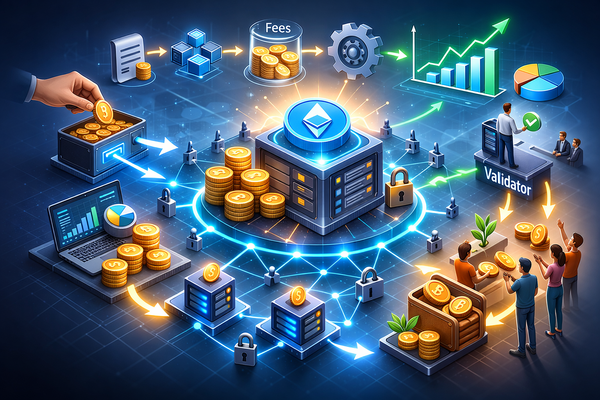
Staking yields are formed through a mix of protocol-issued rewards, transaction fees, and validator incentives, all dynamically shaped by network activity and participation rates.

Fundamentals
Intrinsic value helps investors estimate what a stock is truly worth based on future cash flows, allowing them to buy with a margin of safety rather than chase market price fluctuations.

Cryptocurrency
Ethereum’s EIP-1559 fee burn and post-Merge issuance model have made ETH conditionally deflationary, its long-term supply now depends on real network usage rather than a fixed monetary cap.

Cryptocurrency
Regulatory clarity may ultimately determine whether crypto remains a speculative asset class or evolves into a fully integrated pillar of global finance.

Fundamentals
AI and automation are quietly reshaping corporate margins by boosting productivity, improving decision-making, and enabling scalable business models that decouple growth from labour costs.

Stocks
Stock buybacks can boost earnings per share and support share prices, but their true impact on long-term investor returns depends on whether they reflect smart capital allocation or short-term financial engineering.

Cryptocurrency
As tokenized real-world assets rapidly grow, they may not yet tame crypto’s wild swings, but they are quietly laying the groundwork for a more stable digital financial system.
Fundamentals
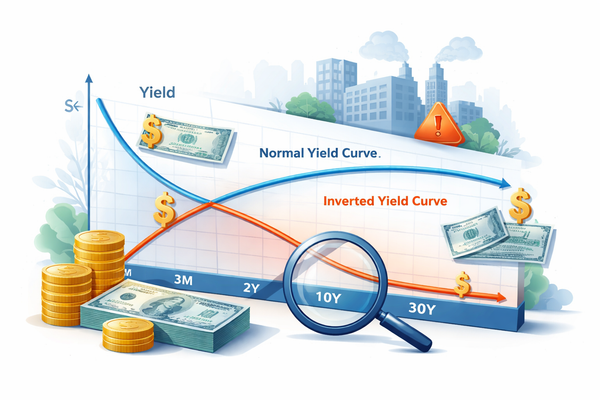
When short-term interest rates climb above long-term ones, the yield curve flips upside down, a quiet but powerful signal that markets expect slower growth, tighter lending, and a possible recession ahead.

Cryptocurrency
Validator incentives in proof-of-stake blockchains turn security into an economic game, rewarding honest participation and making attacks financially self-destructive.

Cryptocurrency
When a major crypto exchange collapses or merges, the shockwaves can drain liquidity, rattle investor trust, and rapidly reshape the market’s structure, often accelerating a shift toward safer custody and decentralized trading.
Disclaimer: This content is for educational purposes only. The platform does not endorse any specific company and does not provide financial or investment advice. Please consult a licensed financial advisor for personalized guidance.