
Leverage Explained: Why Small Market Moves Create Big Gains and Losses
Leverage can turn small market moves into big wins or brutal losses, making it less a shortcut to profit and more a true test of risk discipline.
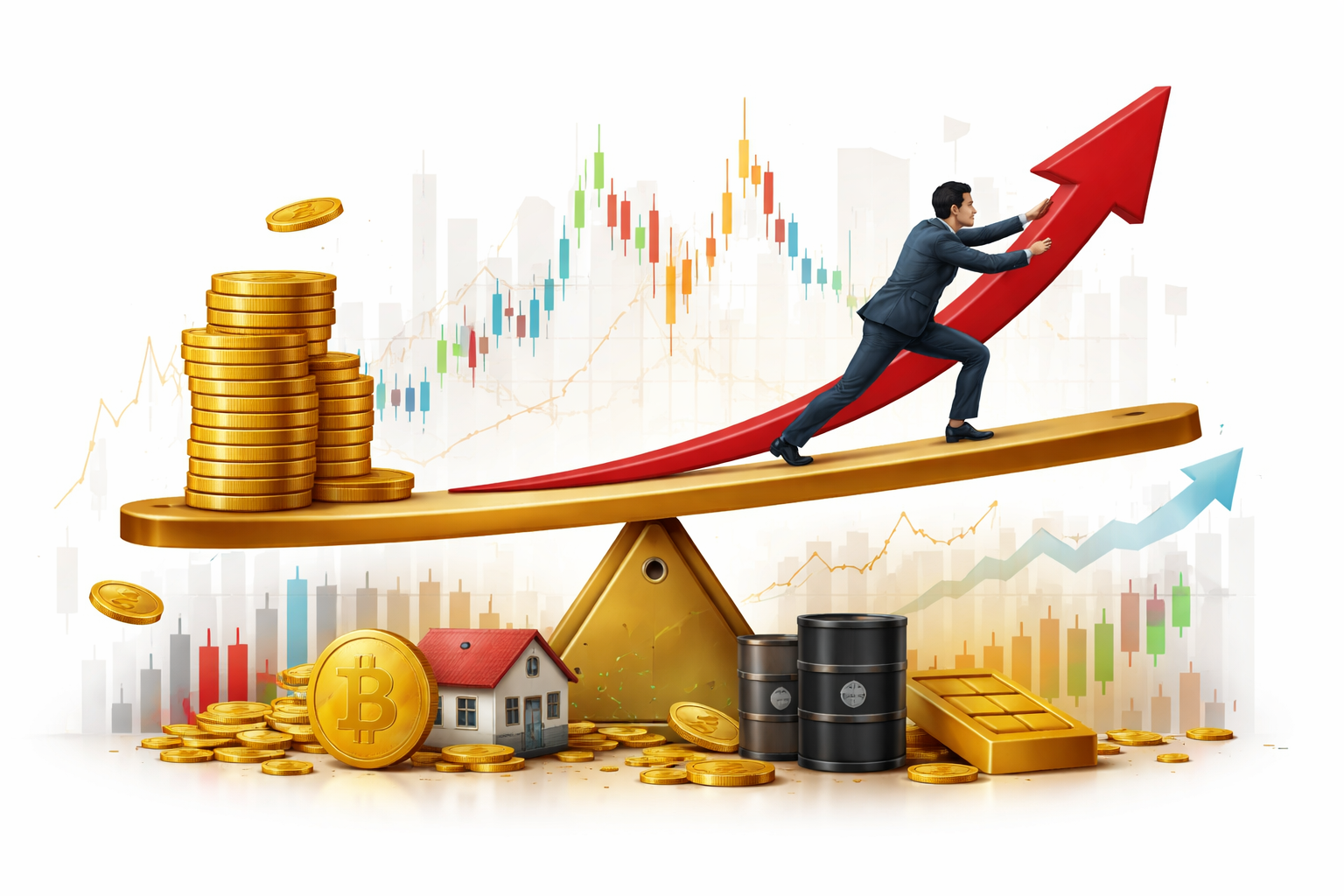
Leverage is one of those financial tools that sounds technical but feels very human in practice, it is about wanting more exposure with less money. At its core, leverage allows investors to borrow capital to increase the size of a position, magnifying whatever happens next. When markets move in your favour, leverage feels like a shortcut to faster gains. When they do not, it can turn a small mistake into a painful lesson.
Excessive leverage in the economy, especially large increases in credit relative to GDP during boom periods, tends to deepen subsequent downturns, making recessions more severe when credit booms unwind. When financial institutions and households become highly leveraged, small declines in asset prices can trigger forced selling, balance-sheet stress, and broad contraction in spending and lending, which can propagate into a financial crisis and prolonged economic downturn. Leverage can be covered or uncovered. Covered leverage is when borrowed funds are backed by assets or collateral (like margin in stocks or mortgages in real estate), limiting lender risk but still amplifying gains and losses for the investor. Uncovered leverage relies on little or no effective collateral (such as some derivatives or highly leveraged crypto positions), making it far riskier because even small price moves can trigger rapid, cascading losses.
In stock markets, leverage usually enters through margin accounts. Investors borrow from their broker to buy more shares than their cash would normally allow. On paper, this looks appealing: if a stock rises 10% and you’re using 2× leverage, your return doubles. But markets rarely move in straight lines. Earnings surprises, macro news, or sudden sell-offs can erase weeks of gains in hours. This balance between opportunity and danger is explained well in an article on financial market leverage, which walks through how margin amplifies both confidence and risk.
In stocks, retail margin leverage is typically capped around 2× (borrow 50% of position value), with stricter rules like Regulation T in the U.S. limiting how much investors can amplify exposure. In crypto, leverage is far more extreme—major exchanges commonly offer 10× to 100×, meaning even a 1% price move can translate into a 10–100% gain or loss on capital. Leverage becomes even more intense in forex markets, where traders often operate with 20× to 50× leverage because currency prices tend to move in small increments. A move that seems insignificant can translate into a double-digit gain or loss on capital. This is why forex trading rewards discipline but punishes emotional decision-making. A detailed breakdown of how leverage works in forex shows how quickly profits and losses can spiral when positions are oversized.
Nowhere is leverage more emotionally charged than in cryptocurrency markets. With exchanges offering 10×, 20×, or even higher leverage, traders are effectively walking a tightrope in one of the most volatile asset classes in the world. A 2% price swing in Bitcoin can mean a 40% gain, or a complete wipeout, depending on the direction. Recent waves of leveraged liquidations have shown how quickly optimism can turn into forced selling when prices move sharply.
Across asset classes, the lesson is remarkably consistent: leverage does not change the market, it changes the person. It amplifies emotions, accelerates outcomes, and leaves very little room for error. Whether it is stocks, forex, crypto, or derivatives, leverage acts like a volume knob on risk, not a magic wand for returns. Understanding its mechanics and psychological impact, as explored in research on the broader implications of leverage, is essential before deciding how much risk you are truly willing to take.