
Integrating AI into Medicine
From AI-powered drug discovery to smarter diagnostics, artificial intelligence is reshaping healthcare in ways patients are already feeling.
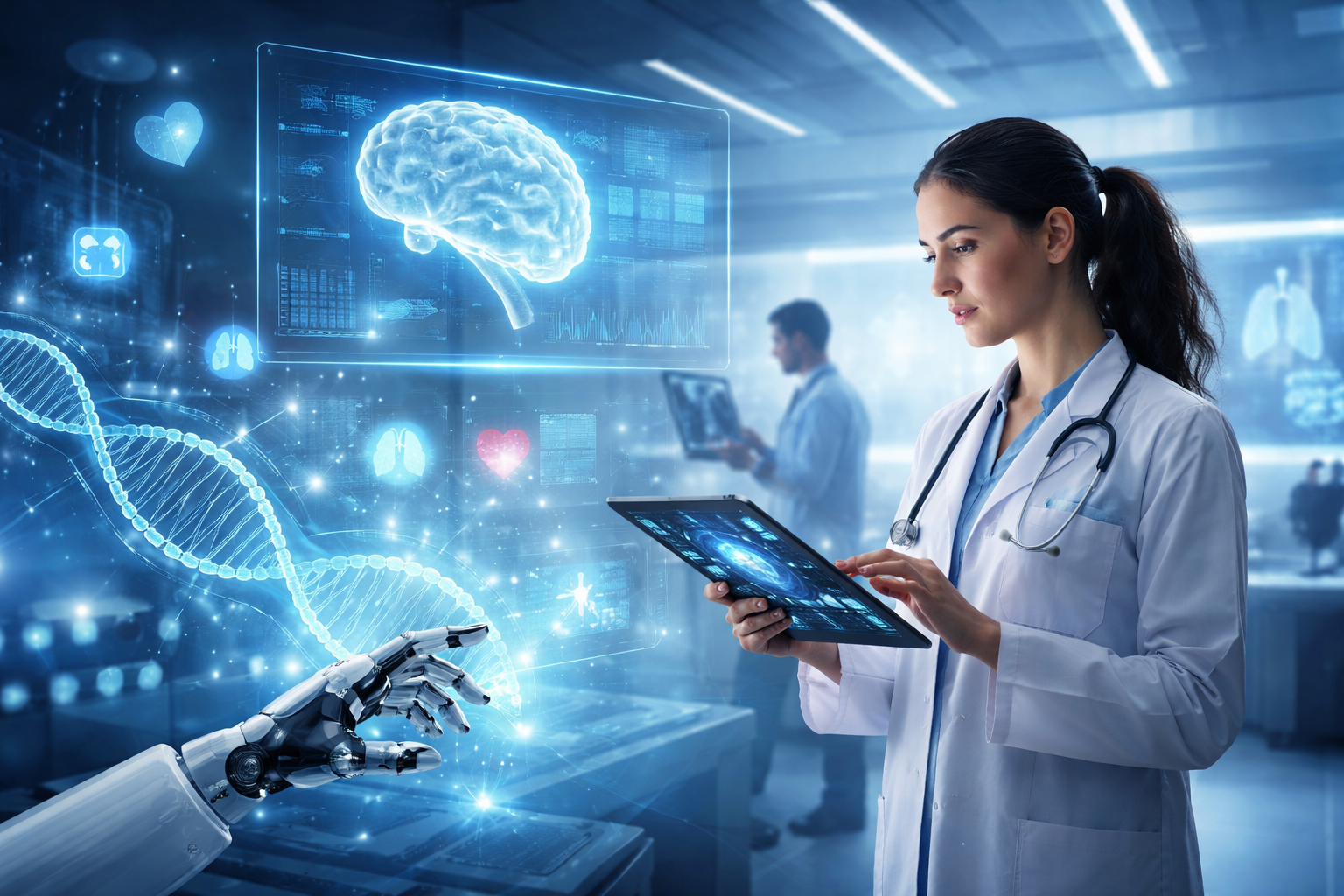
Today the idea of a computer helping doctors diagnose illness is quietly becoming routine. Artificial intelligence has seamlessly woven into many corners of medical science, often working behind the scenes, flagging abnormalities in scans, sifting through multitudes of research papers or converting hours of paperwork into minutes. What makes this shift remarkable isn’t just the technology itself, but how naturally it’s beginning to fit into everyday healthcare. An academic review by the Royal Society of Chemistry captures this moment well, showing how AI is no longer experimental but increasingly clinical, practical, and patient-focused.
One place where AI feels almost magical is drug discovery. Traditionally, finding a new drug is slow, expensive, and uncertain but AI is dedicated to changing that pace. When biotech start-up Nabla Bio partnered with Takeda, the goal was to integrate AI into the process of drug development and to build algorithms that can explore protein structures and therapeutic options at speeds humans simply can’t match. According to a Reuters report, this approach could compress years of early research into months, bringing promising treatments to patients far faster than before.
Inside clinics and hospitals, AI’s impact is often quieter but just as meaningful. Many doctors will confirm that their biggest enemy isn’t disease but documentation. Tools like Heidi Health act as AI medical scribes, listening during appointments and automatically generating clinical notes, so doctors can focus on patients instead of keyboards. At the same time, companies such as Qure.ai and PathAI, are helping radiologists and pathologists catch early signs of disease in scans that might otherwise slip through the cracks. These tools don’t replace clinicians; they act like a second set of eyes that never gets tired.
Some AI breakthroughs feel especially human in their impact. One widely reported example is an AI-powered stethoscope developed with Eko Health, capable of detecting serious heart conditions in seconds. In trials reported by The Guardian, this tool significantly improved early diagnosis, a reminder that even small technological shifts can have life-changing consequences.
The growth trajectory of AI in healthcare is astonishing. Analysts project that by 2034–2035, the global healthcare AI market could expand into the hundreds of billions, potentially approaching $613.8 billion or more. Products like AI-powered medical devices are also booming, with market valuations projected to reach nearly $886 billion by 2034. Looking ahead, the future of AI in medical sciences feels less about machines taking over and more about medicine becoming more humane. With better prediction models, personalized treatment plans, and continuous monitoring, healthcare could move from reacting to illness to preventing it altogether. Still, trust will be crucial. Researchers and clinicians consistently emphasize the need for strong ethical standards, transparent algorithms, and human oversight to ensure AI earns its place at the bedside. If done right, AI won’t replace the doctor–patient relationship, it may finally give it the time and attention it deserves.
*Disclaimer: The post is simply designed to educate individuals about assets and their workings. The platform does not endorse any specific asset and does not provide financial or investment advice.